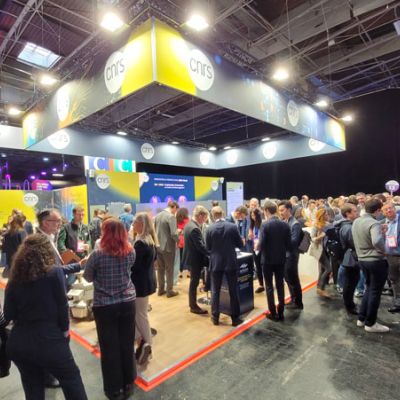
The CNRS, a key actor in deeptech, will once again be present at Vivatech, Europe’s largest annual tech gathering entirely dedicated to innovation from 22-25 May 2024. The organisation’s experts and…
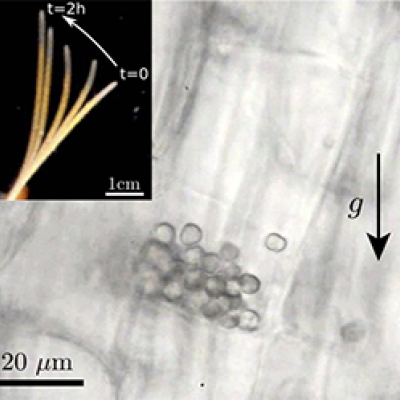
Plants can detect the slightest angle of inclination. Yet the mechanism by which they sense gravity relies on microscopic grains. In theory, such a system should hardly allow for precise detection of…
The aim of the international One Health summit taking place from April 5th to 7th is to improve our collective health by taking the major role played by the environment into account. The CNRS has…
This year, the CNRS launched its third International Research Center (IRC), this time with Japan’s prestigious University of Tokyo, the country’s leading institution. Its president, Teruo Fujii,…
In the face of Donald Trump’s new denial of climate change, CNRS scientists have reacted by pointing to the facts and levers for action to halt this planetary crisis.
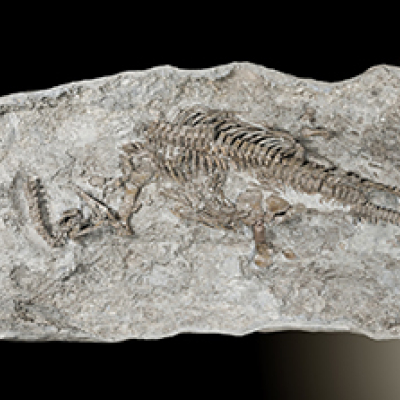
While dinosaurs reigned on dry land and in the sky, other reptiles populated the seas and oceans. Of the latter, plesiosaurs, whose means of locomotion may be described as “underwater flight,” formed…
As the European Union prepares to put forward a European Ocean Act aimed at providing a lasting structure for maritime spatial planning and ocean observation, the CNRS sets out its vision for an…
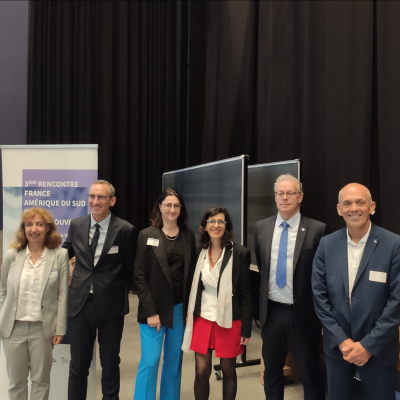
How can we facilitate the advancement of open science on a global scale? The third international open science conference between France and South America revealed numerous connections between CNRS…
The idea of a 'sentinel port' capable of alerting and guiding its territory is emerging in overseas ports finding themselves at the crossroads between various geostrategic issues. This approach is…