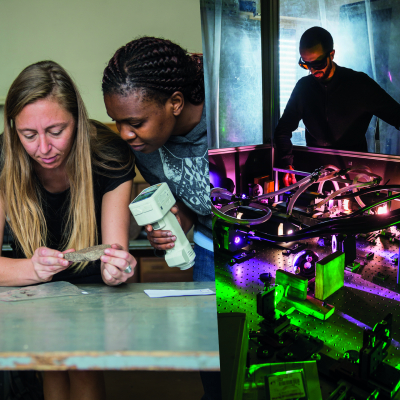
With an “entry package” approaching 300,000 euros, and a promise of tenure upon the contract’s completion, this new recruiting effort aims to attract scientists from beyond the world of French higher…
The CNRS invited scientific institutions from numerous countries at Maison Irène et Frédéric Joliot-Curie in Brussels to discuss the International Panel for Ocean Sustainability (IPOS). Participating…
The CNRS has produced a guide to public speaking to help scientists who wish to do so. This true toolbox is based on the recommendations of the CNRS's Ethics Committee and on the expectations of our…
The CNRS is a key player in innovation, both in France and worldwide. Finding applications for research results ensures that scientific advances benefit society, which is one of the missions…
At 6000 years old, this copper amulet is the earliest lost-wax cast object known. Now, researchers have finally discovered how it was made, using a novel UV-visible photoluminescence spectral imaging…
Three years after its creation, the CNRS's Mission for Scientific Expertise (MPES) will be presenting three of its collective institutional scientific assessments this year. The director of the MPES…
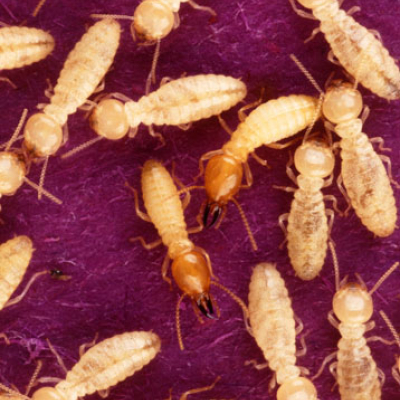
Invasive insects cause at least 69 billion euros of damage per annum worldwide. Such is the estimation made by an international research team led by Franck Courchamp, CNRS research director at…
Following the CNRS's 'Roadmap for Open Science' published in 2019, the organisation's 'Research Data' plan encourages researchers to make their data accessible and reusable. Alain Schuhl, the CNRS…
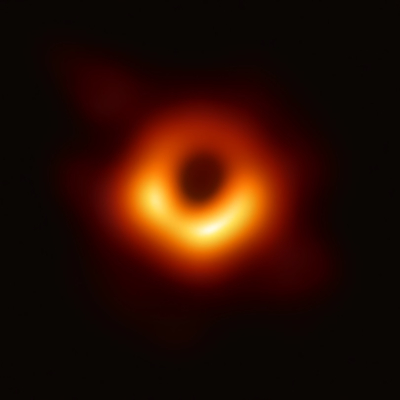
The very first image of a black hole has been obtained by the Event Horizon Telescope (EHT), a network of eight radio telescopes on four different continents designed for this purpose.
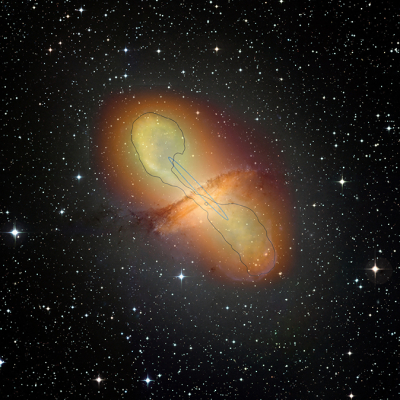
An international collaboration bringing together over 200 scientists from 13 countries has shown that the very high-energy gamma-ray emission from quasars, galaxies with a highly energetic nucleus,…