


Ig-Nobel: some serious science
A Nobel Prize is often the crowning moment for a researcher's career while a CNRS bronze medal can serve to launch such a career. But what if it is a humorous award like the Ig-Nobels?
"It's the prize I've always wanted" says Daniel Bonn, a CNRS research professor currently seconded to the University of Amsterdam. The prize in question is the Ig-Nobel - a play on the words 'Nobel (Prize)' and 'ignoble' - created in 1991 by Marc Abrahams, the creator and editor of the journal Annals of Improbable Research. The idea at the time was to highlight discoveries "that cannot, or should not, be reproduced" like the memory of water but it is now awarded to research considered deserving because "if it makes you laugh at first, it will make you think afterwards".
In the past Daniel Bonn had also proved that a person can't drown in quicksand and defined the mix for perfect sand to make sandcastles so perhaps he "should have had it sooner". But he has now been recognised for his work using chromatography to separate sober and drunk worms. He points out that "this is really serious research. We were doing things we thought important and which were funny too."
Numerous award winners
The Ig-Nobel Prize is often awarded to (sometimes international) teams, that is all the authors of the winning article. In 1993, the award for literature was given to the 976 co-authors of "a medical research paper which has one hundred times more authors than pages."
In fact, these worms represent so-called 'active' polymers in that they are self-propelled and capable of collective behaviour. They are low cost and low maintenance so there are many objects to study and, as they are large, they can be directly observed which is not the case for more conventional polymers. Scientists have reduced their level of activity to simulate materials at very low temperatures (without thermal agitation or activity) by alcoholising them, albeit reversibly. The researchers then demonstrated that chromatography (the technique of passing a mixture through a kind of labyrinth) is an effective method for separating active polymers according to their level of activity. This discovery could be of use in study of such materials.
However, Daniel Bonn is having difficulty obtaining funding for his research because it is considered too original in the Netherlands. He has worked in both France and the land of tulips and very much appreciates the human and financial resources dedicated to research in the Netherlands. Conversely he acknowledges that "the complete freedom you have as a CNRS researcher allows for a level of creativity you can't find anywhere else" which he has tried to bring to this most particular line of research.
Interest from the media and the general public
Like all Ig-Nobel prize winners, Daniel Bonn and his team were lucky enough to pocket a Zimbabwean 10,000 billion dollar note for their work although frankly this note is worth more as a collector's item. In fact Zimbabwe stopped using the currency in 2009 after a period of massive inflation at the height of which the Ig-Nobel award was worth about $0.04.
Above all, the researcher received "perhaps even more attention from the media than for a real Nobel". It is true that the subjects are funny and thus undoubtedly say more to the general public. The journal Science Advances recorded less than 200 downloads of Daniel Bonn's article in the first 30 days after it was published but it got a 'second wind' in October 2024 when the Ig-Nobels were announced with over 10,000 downloads. The researcher explains that "you gain a lot in visibility when you're awarded this prize, people invite you, they want to talk to you." Daniel Bonn aims to take advantage of this opportunity to help the field of active systems research to "grow", assuring that "in the long term I think this award will have a really positive impact on my career."

This media coverage also made an impression on the academic Marie-Christine Cadiergues
Fifteen years ago, the Ig-Nobel Prizes were perhaps less well-known than today but even so Marie-Christine Cadiergues spent "at least a month and a half" answering "non-stop" questions from journalists by email, phone or on the radio. She also took part in the 2010 'Ig-Nobel tours' organised in Europe almost every year. This gave her the opportunity to present her award-winning research at universities in England, Switzerland and the Nordic countries at similar conferences to the main Ig-Nobels award ceremony held annually at Harvard or the MIT
How does the award look on a CV?
Since then the media pressure has died down but the subject still regularly comes up when the prize is announced in the autumn. "A colleague who's older than me told me the renown would last a long time and he was right. You contacting me after all these years proves that," laughs the researcher.
Moreover this colleague "didn't find the prize was negative for the institutions or for the winner" and Marie-Christine herself has "never felt mocked or disadvantaged" because she won the award. Nonetheless she got in touch with previous winners to find out more before she accepted the prize: "They all advised me to say yes but not to put it in my CV because, well, they hadn't" she says. When she finished her thesis she followed this advice but now says "I think I'll put it in my next activity report! My career and position are sorted now so I'm less hesitant than when I was younger."
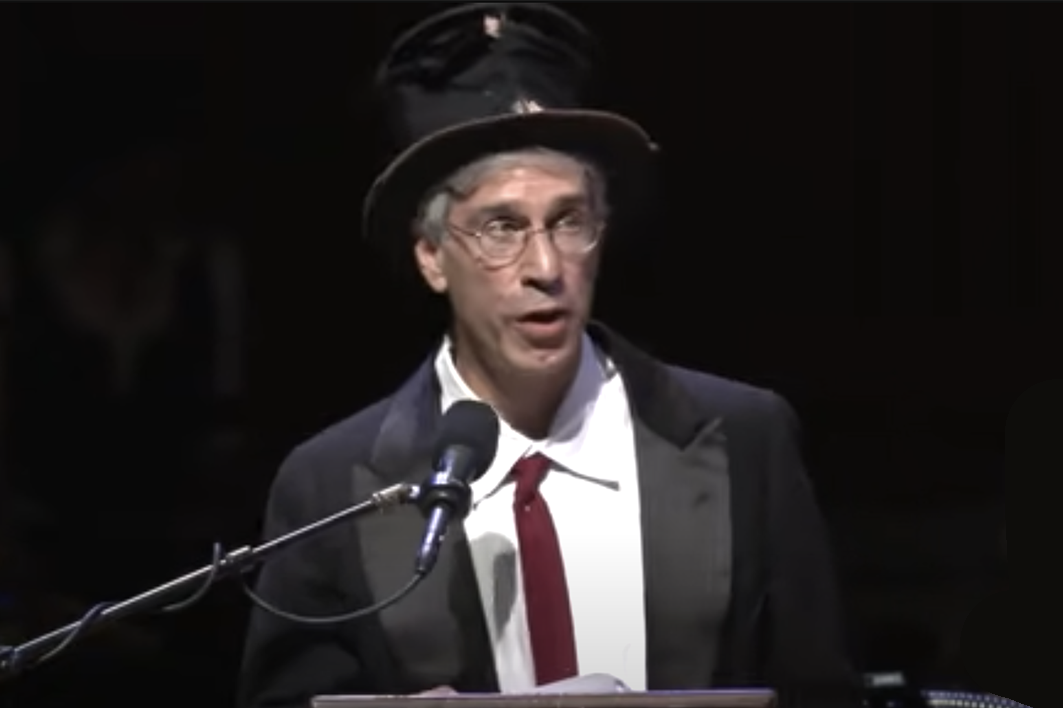
Marc-Antoine Fardin
Despite Ig-Nobel Prize's "burlesque and offbeat" side, the award still has "an academic framework" which the researcher appreciates. Also, real Nobel Prize winners attend the award ceremony every year. For example, the American researcher Roy Jay Glauber has taken part in nearly every ceremony as the 'Keeper of the Broom' which he uses to sweep the stage of the paper aeroplanes that attendees at the event traditionally throw. The only event he missed was in 2005 when he had to go to Stockholm to receive his Nobel Prize for Physics. Andre Geim won the 2000 Ig-Nobel in physics for levitating frogs in magnetic fields but was also awarded the Nobel Prize for Physics with Konstantin Novoselov, for their work on graphene. Also he is still the only scientist to have been awarded both prizes. "It's made by and for scientists which is why it works," explains Marc-Antoine Fardin.
The Ig-Nobel prize has "opened doors in terms of communication" for him, bringing regular invitations to speak on the subject in a variety of formats to audiences with varying levels of specialisation. Apart from this, Marc-Antoine Fardin considers that receiving the award has not changed his way of working. And with good reason. "The fact I wrote the winning article already testified to a certain way of carrying out research!"